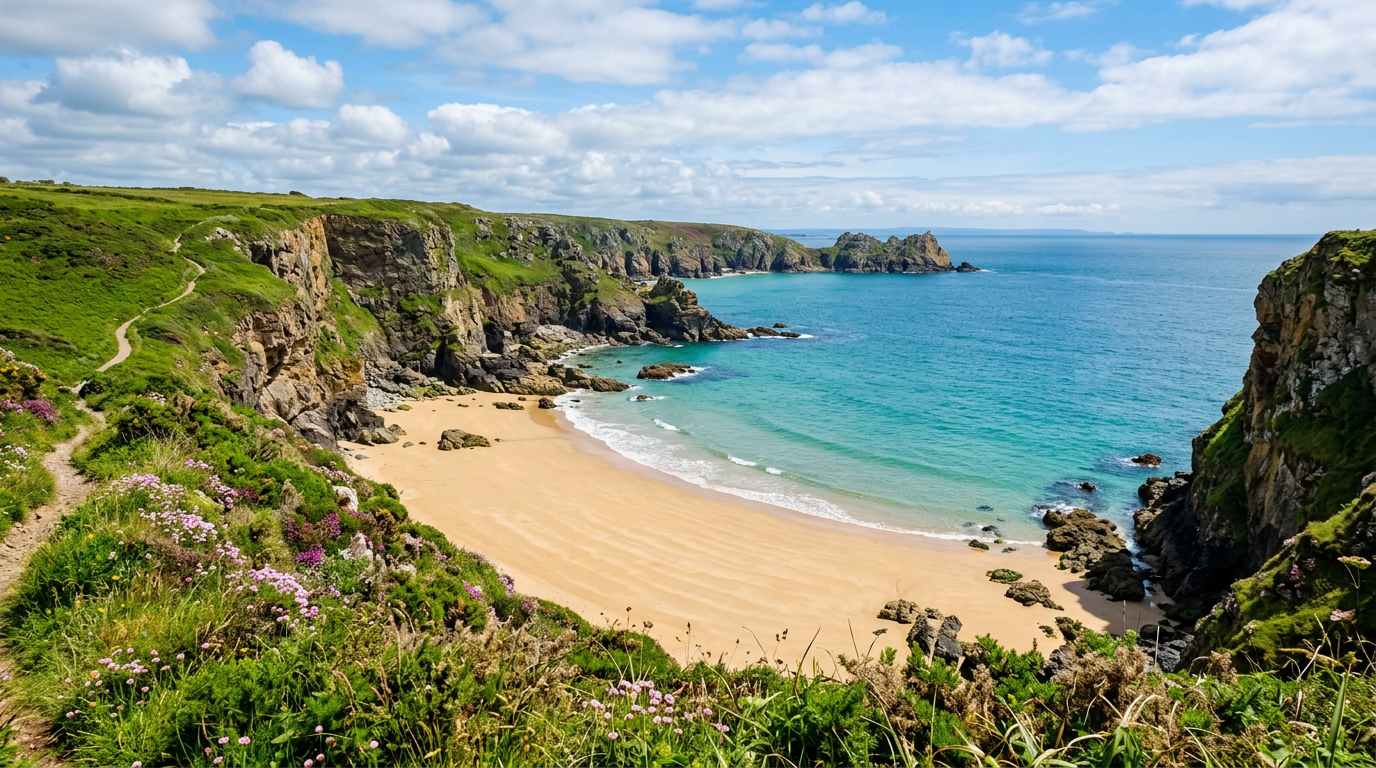
Britain's coastline stretches for over 19,000 miles — a staggering figure that most of us barely begin to explore. While the nation queues for ice creams at Brighton and lays out towels at Bournemouth, entire stretches of jaw-dropping shoreline remain blissfully overlooked. These are beaches where you can hear the waves without competing with a Bluetooth speaker, where the sand holds only the prints of oystercatchers, and where the views genuinely stop you in your tracks.
Over the past two years, I've walked, scrambled, and occasionally waded to some of the UK's most underrated coastal spots. What follows is a curated list of ten beaches that deserve far more attention than they receive — along with practical details to help you actually get there.
1. Barafundle Bay, Pembrokeshire
Regularly compared to Caribbean shores (admittedly with a significant temperature adjustment), Barafundle Bay sits on the southern tip of the Pembrokeshire Coast National Park. There's no road access — you reach it via a half-mile clifftop walk from Stackpole Quay car park — and that modest barrier is enough to keep crowds manageable even in August. The sand is fine and golden, the water a shifting palette of turquoise and emerald, and the bay is framed by limestone cliffs draped in wildflowers from May onwards.
"I've photographed beaches across five continents. Barafundle, on a still morning in June, is as beautiful as anywhere I've pointed a lens." — Landscape photographer Gareth Jenkins
2. Kynance Cove, Cornwall
Cornwall hardly qualifies as overlooked, but Kynance Cove — tucked into the Lizard Peninsula's western flank — still flies under the radar compared to Sennen or Porthcurno. The serpentine rock stacks create natural islands at low tide, and the water clarity here rivals anything in the Mediterranean. The National Trust car park is a 15-minute walk above, and the café at the base of the cliff is open from Easter through October. Timing matters: visit within two hours either side of low tide for the full expanse of sand.
3. Rhossili Bay, Gower Peninsula
Three miles of unbroken sand backed by the dramatic ridge of Rhossili Down — this is the beach that consistently appears on "best in Britain" lists yet somehow never feels busy. The Gower was the UK's first designated Area of Outstanding Natural Beauty, and Rhossili is its crown jewel. Surfers gather at the northern end near Llangennith, but walk south towards Worm's Head (accessible at low tide) and you'll find remarkable solitude. Paragliders launch from the cliffs above, adding unexpected colour to an already spectacular scene.
4. Sandwood Bay, Sutherland
If remoteness is what you're after, Sandwood Bay delivers in extraordinary measure. Located in the far northwest Highlands, it requires a four-mile walk from the nearest road at Blairmore. There is no mobile signal, no facilities, and no shelter — just a mile of pink-tinged sand, a towering sea stack called Am Buachaille, and the kind of silence that makes your ears ring. This is a beach for experienced walkers who carry their own water and leave no trace. Wild camping is permitted under Scottish access rights, and sleeping here under the northern sky is an experience that borders on the spiritual.
5. Marloes Sands, Pembrokeshire
Pembrokeshire's second entry on this list is well deserved. Marloes Sands is reached via a 20-minute walk from the National Trust car park through farmland, and the beach that greets you is a geology lesson in motion — red and grey sandstone striations folded into dramatic patterns along the cliff face. At low tide, rock pools teem with anemones, crabs, and blennies. The offshore islands of Skokholm and Skomer are visible to the southwest, home to one of the world's largest Manx shearwater colonies.
6. Covehithe, Suffolk
The Suffolk coast is disappearing — literally. Covehithe loses roughly three to five metres of cliff each year to erosion, which gives the beach an eerie, impermanent beauty. Fallen trees lie across the sand like driftwood sculptures, and the crumbling cliffs reveal cross-sections of geological time. Access is via a footpath through Covehithe Broad, and parking is limited to the lane near the ruined church of St Andrew's. This beach won't exist in its current form for much longer, which makes visiting now feel both urgent and melancholy.
7. Camusdarach, Scottish Highlands
Made famous by the film Local Hero, Camusdarach sits on the Road to the Isles between Arisaig and Morar. The white sand is almost startlingly bright against the dark water, and on clear days the Sgurr of Eigg and the Cuillin of Rum dominate the western horizon. A short walk from a small car park off the B8008 brings you to the beach, and while it draws a modest summer crowd, early mornings and autumn visits offer perfect solitude. The water is cold year-round — a wetsuit is advisable even in July.
8. Mwnt, Ceredigion
A tiny cove beneath the whitewashed Church of the Holy Cross, Mwnt is a pocket beach with disproportionate charm. The sand is sheltered by high cliffs, the water is remarkably clear, and bottlenose dolphins from the Cardigan Bay population are regularly spotted from the headland between June and September. There's a steep path down from the car park, which limits pushchair access but also keeps numbers low. Bring binoculars — the dolphin-watching here is some of the best shore-based viewing in Britain.
9. Oldshoremore, Sutherland
Just south of Kinlochbervie in the far northwest, Oldshoremore is a crescent of white shell-sand divided by rocky outcrops into a series of smaller coves. The beach faces northwest, which means sunsets here are extraordinary — the sky burns orange and purple over the Atlantic horizon. Access is straightforward from a small car park, making this a more approachable alternative to Sandwood Bay for those who want Highland remoteness without the four-mile hike. The machair grassland behind the beach blooms with orchids and buttercups in early summer.
10. Church Doors Cove, Pembrokeshire
A narrow chasm in the limestone cliffs near Skrinkle Haven, Church Doors Cove takes its name from the pointed rock arches that frame the entrance like Gothic doorways. Access involves a steep descent through a natural rock corridor, which keeps most visitors away. At low tide, the small beach reveals a floor of flat, water-polished stone, and the cave systems at the base of the cliffs are worth exploring with a torch. This is part of the MoD Castlemartin Range, so access is restricted to weekends and holidays when firing is not taking place — check the schedule before setting out.
The Complete Comparison
Planning a trip around several of these beaches? The table below summarises the key practical details for each location.
| Beach | Region | Best For | Crowd Level | Parking | Dog-Friendly |
|---|---|---|---|---|---|
| Barafundle Bay | Pembrokeshire | Swimming, scenery | Low–Moderate | Stackpole Quay (pay) | Yes (year-round) |
| Kynance Cove | Cornwall | Rock pools, photography | Moderate | NT car park (pay) | Seasonal restrictions |
| Rhossili Bay | Gower, Wales | Surfing, walking | Low–Moderate | NT car park (pay) | Yes (year-round) |
| Sandwood Bay | Sutherland | Wild camping, solitude | Very Low | Blairmore layby (free) | Yes (year-round) |
| Marloes Sands | Pembrokeshire | Geology, rock pools | Low | NT car park (pay) | Yes (year-round) |
| Covehithe | Suffolk | Solitude, photography | Very Low | Roadside (free, limited) | Yes (year-round) |
| Camusdarach | Highlands | Scenery, island views | Low | Small car park (free) | Yes (year-round) |
| Mwnt | Ceredigion | Dolphins, swimming | Low | NT car park (pay) | Yes (year-round) |
| Oldshoremore | Sutherland | Sunsets, wildflowers | Very Low | Small car park (free) | Yes (year-round) |
| Church Doors Cove | Pembrokeshire | Caves, adventure | Very Low | Roadside (free) | Yes (when range open) |
Practical Tips for Beach Hunting
A few things I've learned from chasing remote coastline:
- Check tide times obsessively. Several beaches on this list — Kynance, Church Doors, Worm's Head at Rhossili — are only fully accessible at low tide. The UK Hydrographic Office website and apps like Magic Seaweed provide reliable forecasts.
- Arrive early or late. Even "quiet" beaches see a midday pulse of visitors in summer. Get there before 9am or after 4pm and you'll often have the place to yourself.
- Carry everything out. Remote beaches have no bins. Pack a bag for your rubbish and pick up anything else you find — these places stay beautiful because visitors take responsibility.
- Wear proper footwear for the approach. Several of these beaches involve clifftop walks or steep descents. Trail shoes or walking boots make a significant difference to both safety and enjoyment.
- Respect wildlife. Seals, nesting birds, and dolphins are part of the appeal. Keep dogs on leads near wildlife, maintain distance from seal pups (at least 50 metres), and avoid climbing on nesting cliffs between March and August.
The Case for Coastal Exploration
Britain's relationship with its coastline is paradoxical. We live on an island — no point in the UK is more than 70 miles from the sea — yet most of us visit the same handful of beaches year after year. The ten locations above represent a fraction of what's out there. Every county with a coastline harbours at least one secret cove, one overlooked headland, one stretch of sand that feels like it belongs to another country entirely.
The best way to find these places is simply to walk. Follow the coastal path in any direction and, within an hour, you'll stumble across something remarkable. Britain's hidden beaches aren't truly hidden — they're just waiting for you to make the effort to find them.