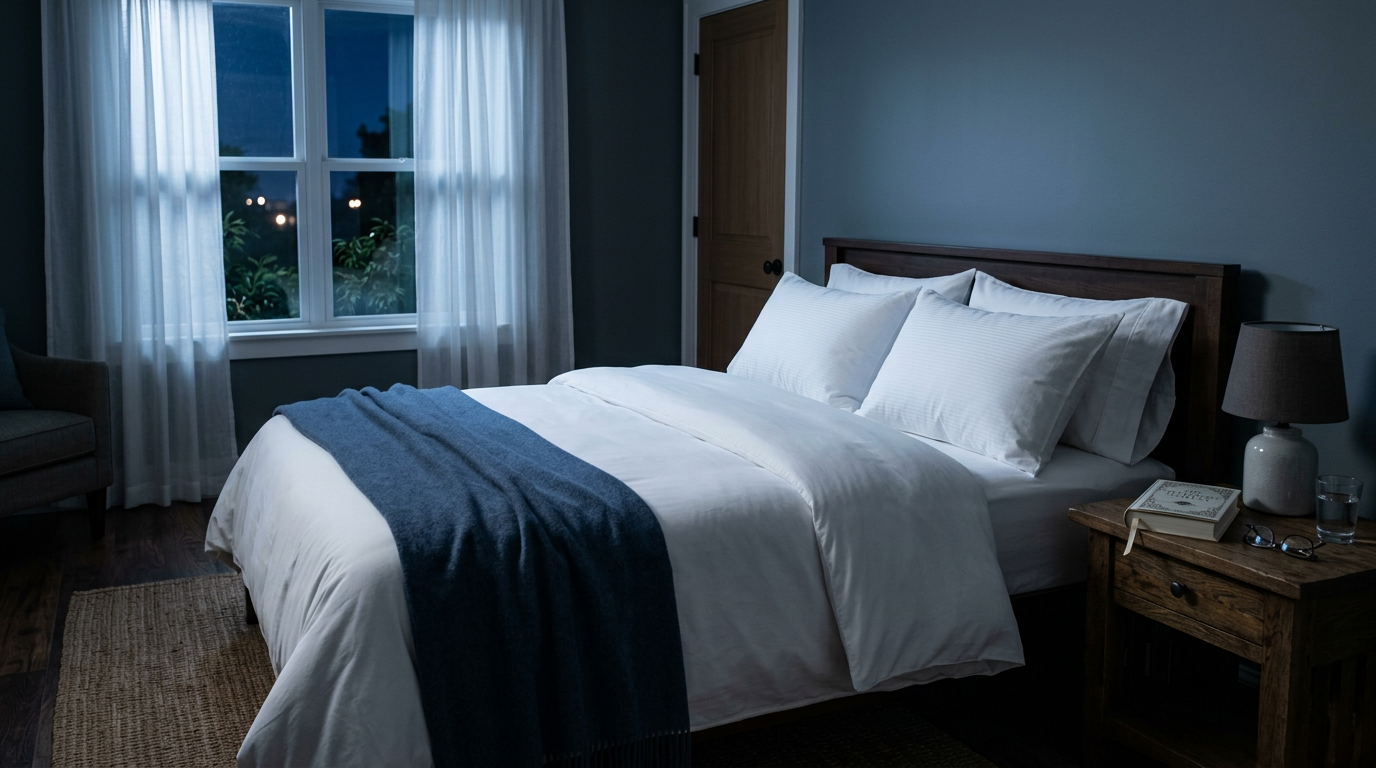
Sleep is not a luxury — it is a biological necessity as fundamental as food and water. Yet one in three British adults regularly fails to get enough of it. The consequences extend far beyond daytime grogginess: chronic poor sleep is linked to cardiovascular disease, type 2 diabetes, weakened immunity, weight gain, and a significantly elevated risk of anxiety and depression. The good news is that sleep science has advanced enormously in recent years, and many of the most effective interventions are free, simple, and available to everyone. Here's what the research actually says.
How Sleep Works: Circadian Rhythms and Sleep Architecture
Your body's sleep-wake cycle is governed by two interacting systems. The first is your circadian rhythm — an internal clock, located in the suprachiasmatic nucleus of the hypothalamus, that runs on a roughly 24-hour cycle. It responds primarily to light exposure, which is why shift workers and frequent flyers struggle so badly: their internal clock is constantly at odds with their environment. The second system is sleep pressure (or homeostatic drive), which builds steadily the longer you've been awake, driven by the accumulation of adenosine in the brain. Caffeine works by blocking adenosine receptors, which is why it masks tiredness without actually eliminating sleep debt.
Once you're asleep, your brain cycles through distinct stages approximately every 90 minutes. Stage 1 (N1) is the drowsy transition lasting a few minutes. Stage 2 (N2) is a lighter sleep where heart rate slows and body temperature drops — you spend about half the night here. Stage 3 (N3) is deep slow-wave sleep, critical for physical restoration, immune function, and memory consolidation. Finally, REM sleep is where most vivid dreaming occurs and the brain processes emotional experiences. Disrupting any of these stages — even without reducing total sleep time — can leave you feeling unrested.
"Sleep is the single most effective thing we can do to reset our brain and body health each day." — Professor Matthew Walker, neuroscientist and author of Why We Sleep
The UK's Sleep Problem in Numbers
Data from the Royal Society for Public Health and the Sleep Charity paint a concerning picture of Britain's relationship with rest. The average UK adult sleeps 6 hours and 19 minutes per night — well below the 7–9 hours recommended for adults by the National Sleep Foundation. A 2025 YouGov poll found that 40% of UK adults described their sleep as "poor" or "very poor," with financial worry, screen use, and work-related stress cited as the top three causes. The economic toll is staggering: the RAND Corporation estimates that sleep deprivation costs the UK economy up to £40 billion per year in lost productivity, equivalent to 1.86% of GDP.
8 Evidence-Based Tips for Better Sleep
The following strategies are grounded in peer-reviewed research and endorsed by sleep medicine professionals. Not every tip will suit every person, but incorporating even three or four can produce meaningful improvements within a fortnight.
1. Lock In a Consistent Sleep Schedule
Going to bed and waking up at the same time every day — including weekends — is the single most powerful habit for improving sleep quality. A 2023 study in Sleep journal found that irregular sleep schedules were associated with a 27% higher risk of metabolic syndrome, independent of total sleep duration. Your circadian clock thrives on predictability. If you're currently erratic, shift your times by 15 minutes every few days until you reach your target.
2. Get Bright Light Exposure in the Morning
Exposure to natural daylight within the first hour of waking anchors your circadian rhythm and promotes alertness. Research from the University of Surrey demonstrated that morning light exposure advances the evening release of melatonin, making it easier to fall asleep at a reasonable hour. Aim for at least 20–30 minutes of outdoor light, even on overcast days — outdoor light on a cloudy morning still delivers roughly 10,000 lux, compared to about 500 lux from typical indoor lighting.
3. Establish a Caffeine Curfew
Caffeine has a half-life of approximately five to six hours, meaning half the caffeine from a 3pm coffee is still circulating in your bloodstream at 9pm. A landmark study published in the Journal of Clinical Sleep Medicine found that consuming caffeine even six hours before bedtime reduced total sleep by over one hour. Set a personal cut-off — noon to 2pm is a sensible range for most people — and remember that tea, chocolate, and some medications also contain caffeine.
4. Create a Cool, Dark, Quiet Bedroom
Your core body temperature needs to drop by about 1°C to initiate sleep. The optimal bedroom temperature is between 16°C and 18°C according to the Sleep Foundation. Blackout curtains or a sleep mask eliminate light pollution, which even at low levels can suppress melatonin production. For noise, earplugs or a white noise machine can help — particularly in urban environments.
5. Build a Wind-Down Routine
A consistent 30–60 minute pre-bed routine signals to your brain that sleep is approaching. Activities that activate the parasympathetic nervous system work best: reading a physical book, gentle stretching, a warm bath (the subsequent drop in core temperature aids sleep onset), or breathing exercises. A 2019 systematic review in Sleep Medicine Reviews found that relaxation techniques reduced sleep onset latency by an average of 10 minutes.
6. Limit Screens Before Bed
The blue-enriched light emitted by phones, tablets, and laptops suppresses melatonin production by up to 50%, according to Harvard Medical School research. But it's not just the light — the content itself matters. Scrolling social media or reading the news stimulates the brain's alertness networks. Aim to switch off screens at least 45–60 minutes before bed. If that's unrealistic, use night mode filters and at minimum avoid content that provokes anxiety or excitement.
7. Use Your Bed Only for Sleep
This principle comes from stimulus control therapy, one of the core components of CBT for insomnia (CBT-i). By working, eating, scrolling, or watching television in bed, you weaken the mental association between your bed and sleep. If you find yourself lying awake for more than 20 minutes, get up and do something quiet in low light, then return when you feel sleepy. This feels counterintuitive but is one of the most effective behavioural interventions for insomnia.
8. Be Strategic About Naps
Napping isn't inherently bad — a 10–20 minute nap before 3pm can boost alertness and performance without affecting nighttime sleep. However, longer or later naps can reduce sleep pressure and make it harder to fall asleep at your target bedtime. If you're struggling with nighttime insomnia, cutting naps entirely for a few weeks is a worthwhile experiment to increase your homeostatic sleep drive.
Comparing Common Sleep Aids and Techniques
From supplements to therapy to technology, there's no shortage of products promising better sleep. But the evidence behind them varies enormously. Here's an honest comparison of the most popular options available in the UK.
| Method | Effectiveness | Evidence Level | Typical Cost | Best For | Caveats |
|---|---|---|---|---|---|
| CBT-i (Cognitive Behavioural Therapy for Insomnia) | Very high | Strong (NICE recommended) | Free via NHS; £50–£100/session private | Chronic insomnia; long-term solution | Requires commitment over 6–8 weeks; NHS wait times can be long |
| Melatonin supplements | Moderate | Moderate | Prescription only in UK (£8–£15/month) | Jet lag; delayed sleep phase; adults over 55 | Prescription required in UK; modest effect size; doesn't address root causes |
| Sleep apps (e.g., Headspace, Calm, Sleepio) | Low to moderate | Mixed (Sleepio has RCT evidence) | Free–£50/year | Mild sleep difficulties; relaxation; habit tracking | Screen use at bedtime is counterproductive; most lack rigorous trials |
| White noise / sound machines | Moderate | Moderate | £15–£60 one-off | Noisy environments; masking disruptive sounds | Some people find it irritating; potential hearing concerns at high volumes |
| Weighted blankets | Low to moderate | Limited | £40–£150 one-off | Anxiety-related insomnia; sensory comfort | Can cause overheating; limited large-scale studies; not for everyone |
| Magnesium supplements | Low to moderate | Limited | £5–£15/month (OTC) | Those with deficiency; mild relaxation | Effect likely minimal if not deficient; can cause digestive issues at high doses |
| Prescription sleeping tablets (e.g., zopiclone) | High (short-term) | Strong | NHS prescription charge (£9.90) | Acute insomnia; short-term crisis use | Dependency risk; not recommended beyond 2–4 weeks; side effects; doesn't fix underlying cause |
Common Sleep Myths — Debunked
Misinformation about sleep is everywhere. Here are some of the most persistent myths, corrected by current evidence.
- "Everyone needs exactly 8 hours." Sleep need varies by individual and is partly genetic. Most adults need between 7 and 9 hours, but some people function optimally on 6.5 hours while others need 9.5. The key metric is how you feel during the day, not a number on a fitness tracker.
- "You can catch up on sleep at the weekend." While a single night of recovery sleep can partially restore cognitive performance, chronic sleep debt cannot be fully repaid by weekend lie-ins. A 2019 study in Current Biology found that "recovery sleep" at weekends failed to prevent metabolic disruption caused by weeknight sleep restriction.
- "Alcohol helps you sleep." Alcohol is a sedative and may help you fall asleep faster, but it severely disrupts sleep architecture — particularly REM sleep in the second half of the night. Even moderate drinking (two to three units) has been shown to reduce sleep quality by up to 24%.
- "If you can't sleep, stay in bed and try harder." This is precisely the wrong advice. Lying awake breeds frustration and strengthens the association between bed and wakefulness. The evidence-based approach is the opposite: get up after 20 minutes, do something calming, and return only when sleepy.
- "Snoring is harmless." While occasional light snoring is common, habitual loud snoring — especially with pauses in breathing — can indicate obstructive sleep apnoea (OSA), a condition affecting an estimated 1.5 million adults in the UK. Untreated OSA significantly increases the risk of hypertension, stroke, and heart disease. If a partner has observed you stopping breathing during sleep, see your GP.
When to Seek Professional Help
Self-help strategies are effective for many people, but some sleep problems require professional intervention. You should speak to your GP if poor sleep has persisted for more than four weeks, if you experience excessive daytime sleepiness that affects your safety (particularly while driving), if you suspect sleep apnoea, or if you're relying on alcohol or over-the-counter medication to fall asleep. Your GP can refer you for a sleep study, prescribe short-term medication where appropriate, or connect you with NHS talking therapies for CBT-i.
Sleep is not a passive state — it is an active, essential process during which your body repairs, your brain consolidates memories, and your immune system recalibrates. Treating it with the same seriousness you'd give to diet and exercise is one of the highest-return investments you can make in your long-term health. Start with one or two changes from the list above, give them two weeks, and build from there. Your future self — better rested, sharper, and more resilient — will thank you.